

A social initiative that began in Türkiye as a domestic effort to cut waste has extended its reach into international climate diplomacy, with a new publication on polar research and a formal partnership with London’s climate action network. The developments trace a line from grassroots social organising to global policy influence, ahead of Türkiye hosting COP31.
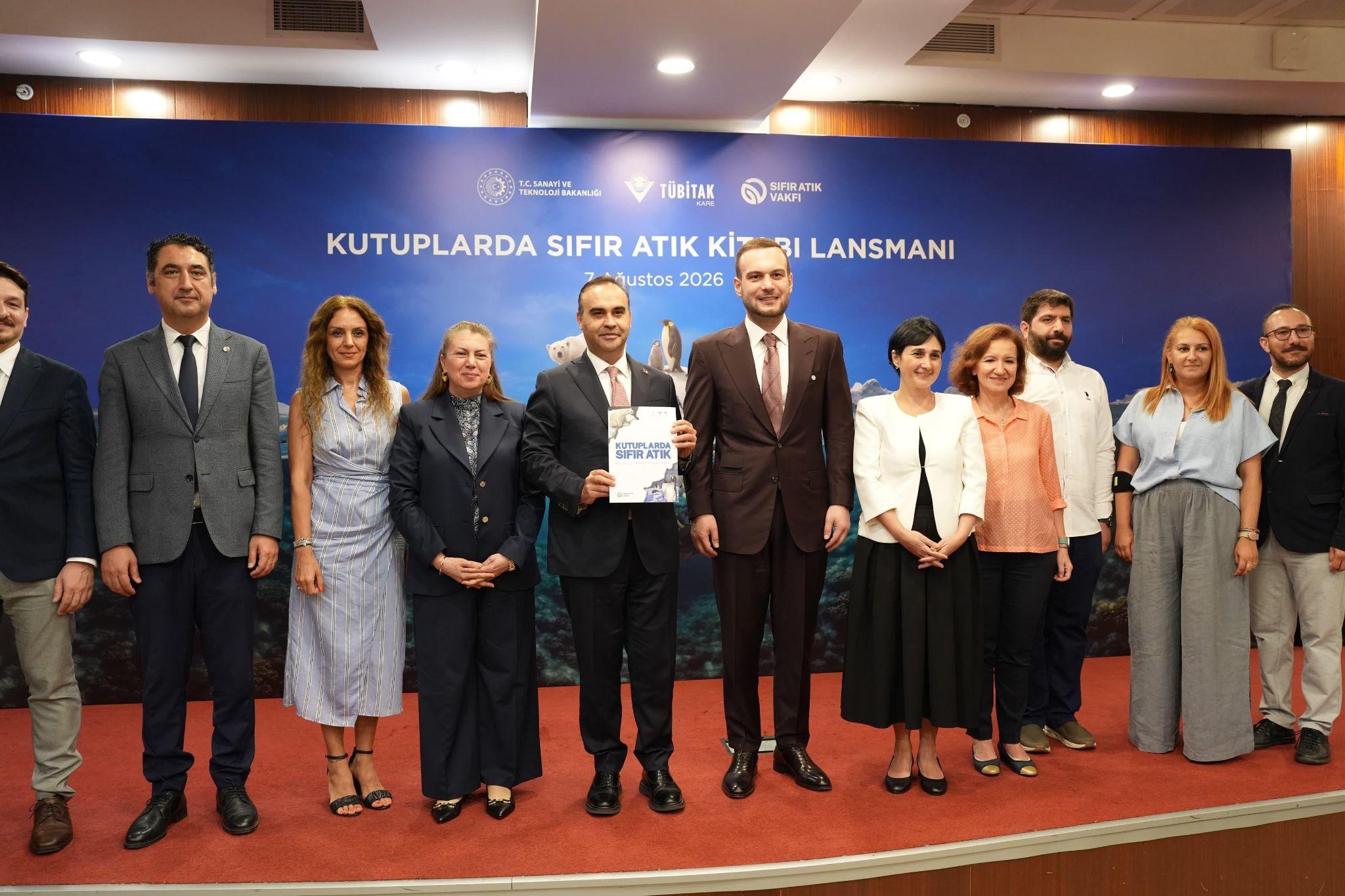
The Zero Waste Foundation announced two milestones in August. On 7 August, it launched the book “Zero Waste in the Polar Regions”, produced with TÜBİTAK’s (Scientific and Technological Research Council of Türkiye) Polar Research Institute. Ten days later, the Foundation signed a cooperation protocol with London Climate Action Week (LCAW), covering climate action, zero waste and the circular economy.
A grassroots initiative with global reach
The story behind the book is as much about social organisation as science. Mehmet Fatih Kacır, Minister of Industry and Technology of Türkiye, said the publication brought together two national initiatives that both began in 2017. “The Zero Waste initiative launched under the leadership of H.E. Emine Erdoğan has grown step by step from a national initiative into a global one,” he added.
Kacır also described how the second strand, scientific expeditions to Antarctica and the Arctic organised under the auspices of the President of the Republic of Türkiye, had allowed Turkish scientists to build a presence in polar research. “At the same time, we began organising scientific expeditions to Antarctica and the Arctic under the auspices of the President of the Republic of Türkiye, enabling Turkish scientists to strengthen the country’s presence in polar research. Through this book, these two initiatives have come together,” he said.
For a readership focused on social issues, what stands out is the trajectory: a public awareness campaign against waste, started under the leadership of one woman, has become embedded in national science policy and now in international climate cooperation. The study reflects the wider zero waste vision advanced by Emine Erdoğan, who founded the Zero Waste Movement and now chairs the UN High-Level Advisory Board on Zero Waste, as well as serving as Honorary President of the Zero Waste Foundation. That progression, from community-level behaviour change to a seat at global policymaking tables, is itself a case study in how social movements can shape institutional practice.
Why the poles matter to everyone else
The book itself brings together 18 articles by scientists who have carried out polar research, covering the scientific, technical, administrative and communication dimensions of applying zero waste principles in the Arctic and Antarctic. It examines climate change, environmental pollution and zero waste in these regions through scientific data, and looks beyond simple waste collection to how expeditions are planned, how materials and resources are used, and how energy, water and logistics are managed on site. The underlying emphasis is on reducing waste before it is created, using resources efficiently and limiting the environmental footprint of research activity in some of the planet’s most fragile environments.
The publication frames the polar regions as critical indicators of global climate change, noting that environmental changes occurring there have consequences that extend far beyond the Arctic and Antarctic themselves. That framing matters for communities far removed from either pole: shifts recorded in these remote regions are presented not as isolated scientific curiosities but as early signals of changes that reach populations everywhere, including those with the fewest resources to adapt. In that sense, the book positions polar research as a matter of shared global consequence rather than a specialist scientific interest confined to a handful of research stations.
A formal link to London’s climate network
The second development, the protocol signed with London Climate Action Week, builds an institutional partnership intended to strengthen knowledge exchange, joint initiatives and international dialogue on zero waste and the circular economy. It was signed by Samed Ağırbaş, President of the Zero Waste Foundation and COP31 High-Level Climate Champion, and Climate Action Founder and CEO Nick Henry.
“After this cooperation protocol, I hope we will carry out strong work and organize joint events at COP31 and London Climate Action Week,” Ağırbaş said.
London Climate Action Week brings together government, cities, business, finance, academia, civil society and local communities, a broad coalition that mirrors the cross-sector reach zero waste campaigning has sought domestically in Türkiye. The agreement gives Türkiye’s zero waste and circular economy experience a direct link into that London-based international climate ecosystem, at a point when Türkiye is preparing to host COP31 and take on a more prominent diplomatic role on climate issues.
COP31 provides the wider diplomatic backdrop to this cooperation, but the immediate, practical focus is on exchange between the Foundation and the LCAW network. Taken together, the polar research book and the London partnership link scientific research, resource efficiency and circular economy thinking to international climate action, while keeping the movement’s original social character intact: zero waste presented not merely as a technical waste management question, but as a public campaign with implications for equity, shared global risk and how communities everywhere experience the consequences of environmental change.
For a movement that started with efforts to change everyday household and institutional behaviour around waste, its arrival in polar science and international climate diplomacy marks a significant expansion in scope, one that keeps its social origins visible even as it moves onto a global stage.